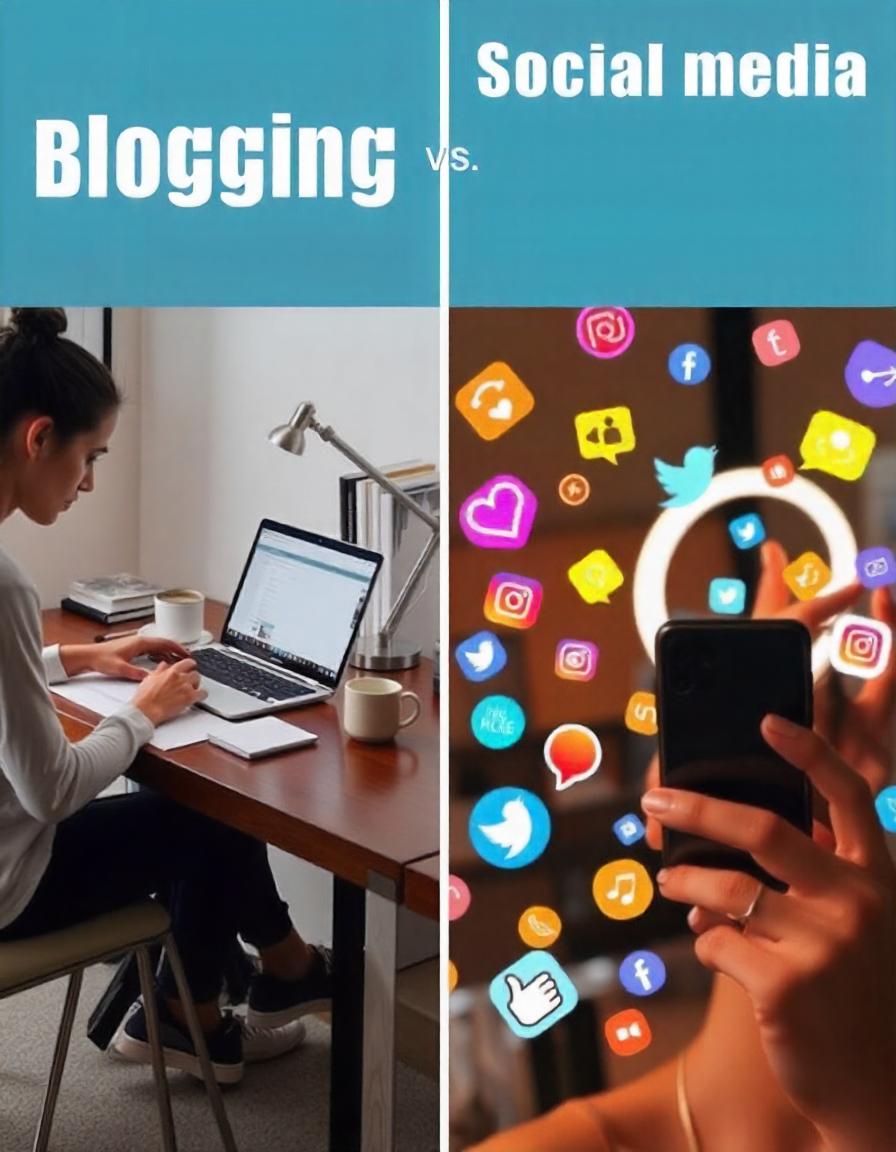
Blogging vs. Social Media: Choosing The Right Platform For Your Message
In the digital age, both blogging and social media offer powerful ways to communicate with audiences, build brands, and share valuable information. While they have overlapping benefits, blogging and social media cater to different content styles, audiences, and engagement strategies. Here’s a guide to help you decide which platform best suits your content goals.
Find Out How To Make Money As A Full-Time Writer/Blogger Guide
1. Content Depth and Format
Blogging:
Blogging allows for long-form content, giving creators the flexibility to dive deeply into topics. Blog posts can range from tutorials and guides to personal reflections, typically ranging from 500 to 2,000 words or more. This format is ideal for educational content, storytelling, and sharing detailed insights.
Social Media:
Social media thrives on short-form content that is quick, engaging, and easily digestible. Platforms like Instagram, Facebook, Twitter, and TikTok prioritize brief updates, images, and videos. While some platforms allow longer captions or threads, the overall focus is on concise, visually engaging posts designed to capture attention quickly.
2. Audience Engagement and Interaction
Blogging:
Blogs tend to attract readers who enjoy in-depth content. Engagement is generally slower but can be highly valuable, often occurring through comments, shares, and email subscriptions. Blog readers are likely to spend time absorbing information, leading to a more invested and loyal audience over time.
Social Media:
Social media platforms foster fast-paced interaction with likes, comments, shares, and direct messaging. Social media engagement is often instantaneous, allowing creators to interact with their audience in real time. This immediacy fosters a sense of community, making social media ideal for building quick connections and boosting brand visibility.
Find Out How To Make Money As A Full-Time Writer/Blogger Guide
3. Content Lifespan and Discoverability
Blogging:
Blog posts have a long shelf life, especially if optimized for search engines (SEO). A well-written blog post can continue attracting traffic for months or even years, as people discover it through search engines. Blogs are ideal for evergreen content—information that remains relevant over time.
Social Media:
Social media posts have a shorter lifespan, with most engagement occurring within hours to days after posting. Posts are often quickly replaced by newer content in users’ feeds, which means that while social media can be great for instant visibility, maintaining relevance requires consistent posting.
4. Monetization Options
Blogging:
Blogs offer several monetization options, including affiliate marketing, sponsored content, display ads, and product sales. Since blog content is often long-lasting, creators can earn passive income from posts that consistently drive traffic.
Social Media:
Social media influencers typically monetize through brand partnerships, sponsored posts, affiliate marketing, and selling their own products. While it may take time to grow a following, high engagement rates on social media can attract brands looking for visible, immediate exposure.
Find Out How To Make Money As A Full-Time Writer/Blogger Guide
5. SEO and Algorithm Strategy
Blogging:
SEO is critical in blogging. Creators optimize blog posts with keywords, meta descriptions, and high-quality backlinks to improve their chances of ranking on search engines like Google. A well-optimized blog can attract organic traffic steadily without frequent updates.
Social Media:
Social media platforms rely on algorithms to determine visibility. These algorithms favor posts with high engagement, so creators need to create content that encourages likes, shares, and comments. Hashtags, posting times, and trends also play a role in reaching a broader audience.
6. Skills and Resources Needed
Blogging:
Blogging requires strong writing skills, a clear voice, and a basic understanding of SEO. Creators who enjoy crafting detailed, well-researched articles may find blogging a great fit. Some graphic design skills are also beneficial for creating images or infographics to support blog content.
Social Media:
Social media content creation requires a mix of skills depending on the platform. Visual skills are essential for platforms like Instagram, while video production is crucial for TikTok and Facebook. Social media creators also benefit from quick adaptability to trends, engaging captions, and an understanding of each platform’s audience.
Find Out How To Make Money As A Full-Time Writer/Blogger Guide
7. Long-term Growth Potential
Blogging:
Blogs are ideal for creating a stable, passive income over time, particularly for evergreen topics. Once a blog establishes a readership and SEO authority, it can drive consistent traffic. However, achieving growth may take longer, as it relies heavily on SEO and reputation building.
Social Media:
Social media growth can be fast, especially if content goes viral or taps into trending topics. However, to maintain growth, creators need to post frequently and adapt to changing trends. While social media offers quicker visibility, maintaining long-term growth can require continuous effort and engagement.
Both blogging and social media offer unique advantages and challenges. Blogging is perfect for creators who enjoy long-form, in-depth content and want to build a lasting online presence. Social media, on the other hand, is ideal for those who enjoy real-time engagement, quick content production, and interactive storytelling.
Ultimately, the choice depends on your goals, strengths, and the type of content you want to share. Many creators find success by combining both, using social media to drive traffic to their blog or using blog content as the basis for social media posts. With a thoughtful approach, either platform can be an effective tool for building a brand and connecting with audiences.